Product-Focused Blog · 2026
How Businesses Can Catch Deepfake Fraud Before It Becomes a Bigger Problem
By Ezekiel Dada — Identity Verification & Fraud Prevention Writer
Identity verification used to be simple: ask someone to take a selfie, compare it to their ID photo, done. The model is no longer reliable.
A more technical approach would be to ask the user to face the camera, turn their head to the right or left, and maybe open their mouth. That, too, doesn’t offer 100% security.
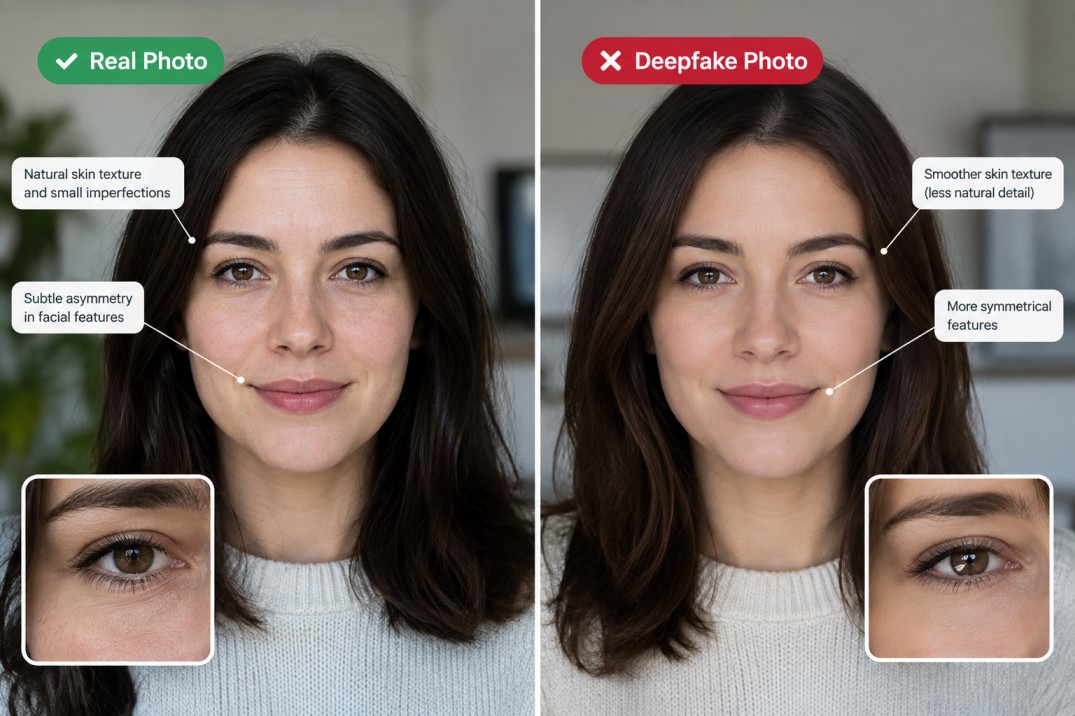
According to Entrust’s 2026 Identity Fraud Report, which was drawn from over 1 billion identity verification events across 195 countries and more than 30 industries, deepfakes now account for 1 in 5 biometric fraud attempts.
This is not to say liveness detection has become totally useless. What it rather means is that liveness detection is only one part of a larger identity verification model. Businesses need to establish layered identity verification to catch deepfake fraud before it becomes a bigger problem.
Quick Answer: What is Layered Identity Verification
Layered identity verification means combining multiple, independent checks so that even if a fraud attempt slips past one layer, it is caught by the others. This includes layers like liveness detection, document authentication, behavioral/device signals, step-up verification, and reverse face search.
Why Layered Identity Verification Beats a Single Check
A layered approach combines controls that examine different parts of the verification process.
Liveness Detection
Purpose: Examines the biometric interaction to determine whether it represents a live person.
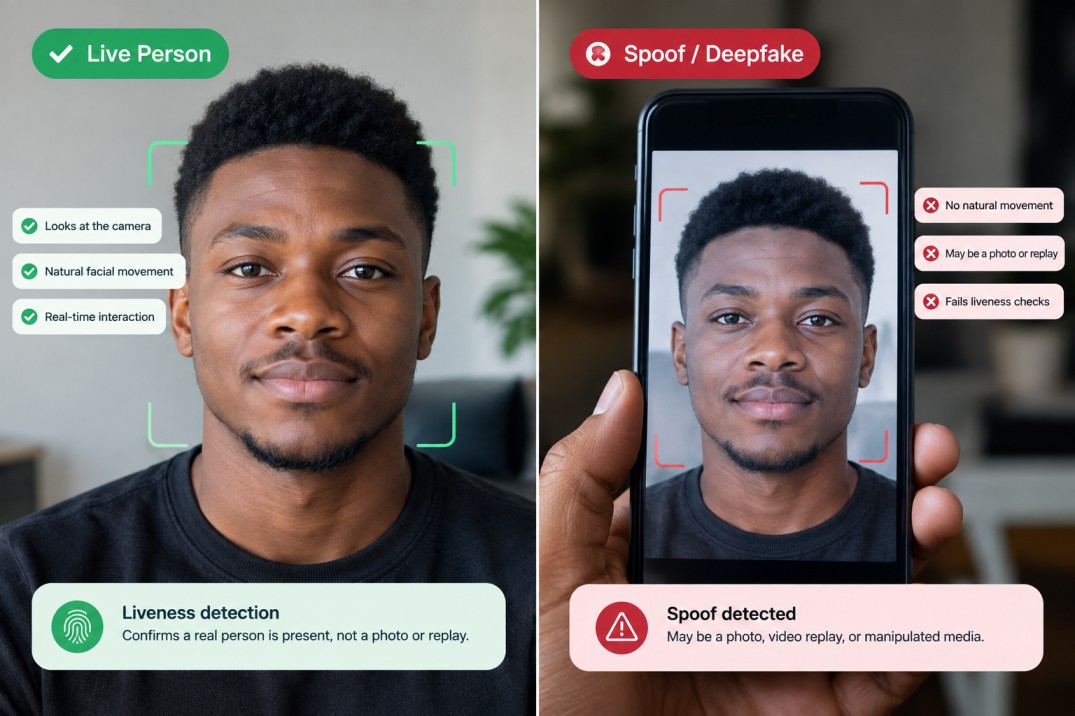
Scammers now initiate injection attacks that feed manipulated images or video directly into the verification pipeline, thereby bypassing the camera. A top liveness detection system can use challenge-response actions, facial movement analysis, texture & depth analysis, 3D face sensing, and motion-based checks to differentiate a live person from a spoof.
Document Authentication
Purpose: Determine whether the identity document is genuine and whether its information is consistent with the verification process.
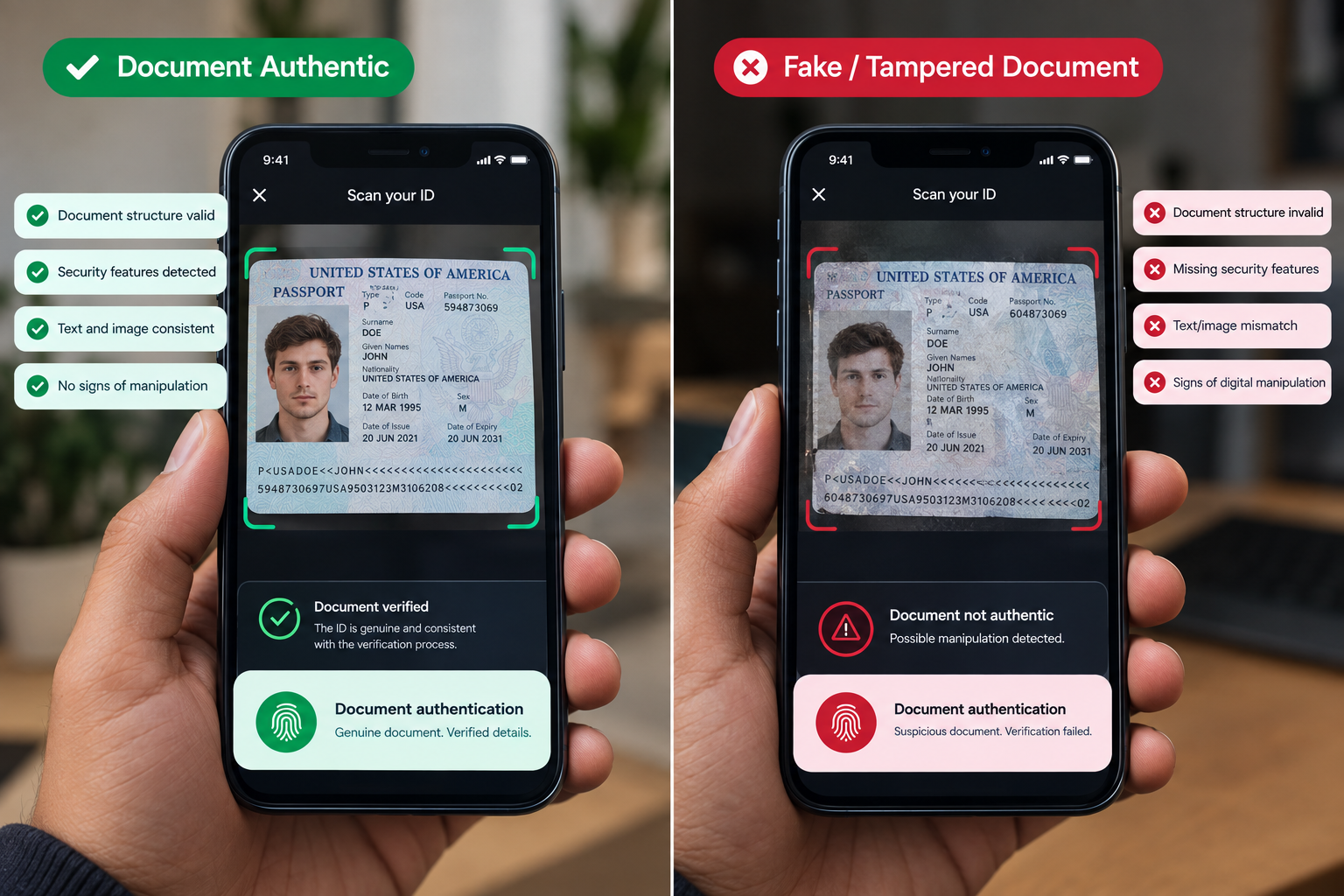
Identity fraud does not begin and end with the face. Attackers are fond of fabricating documents. A document authentication layer can examine information, such as document structure, security features, text, images, and signs of digital manipulation.
Behavioral and Device Signals
Purpose: Flags anomalies that the first two layers can’t see on their own.
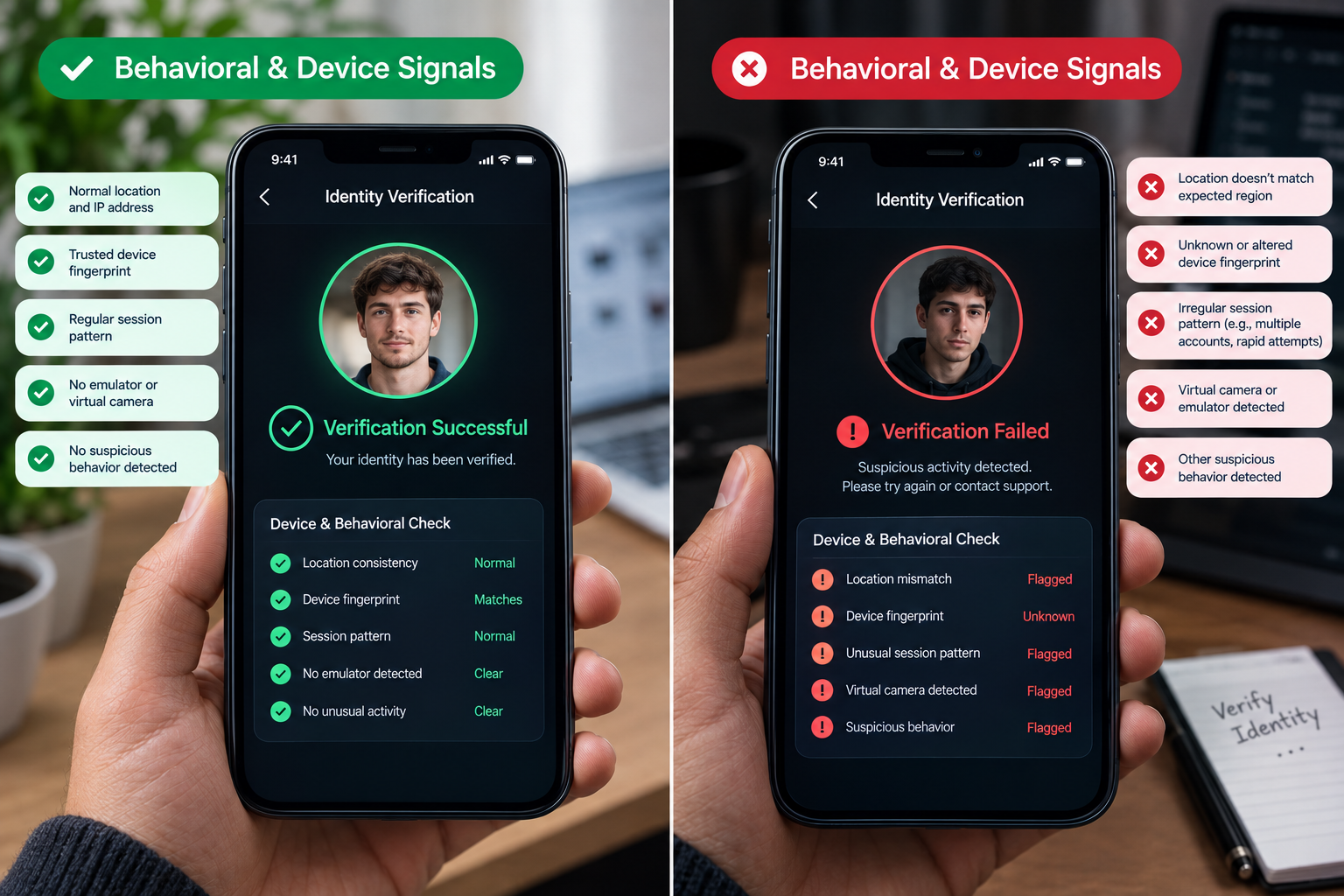
A continuous monitoring layer that checks users’ behaviors and device signals, such as unusual session patterns, inconsistent device fingerprints, emulator or virtual-camera indicators, and other suspicious signs.
Step-up Verification
Purpose: Additional proof of identity when a verification or transaction presents a higher level of risk.
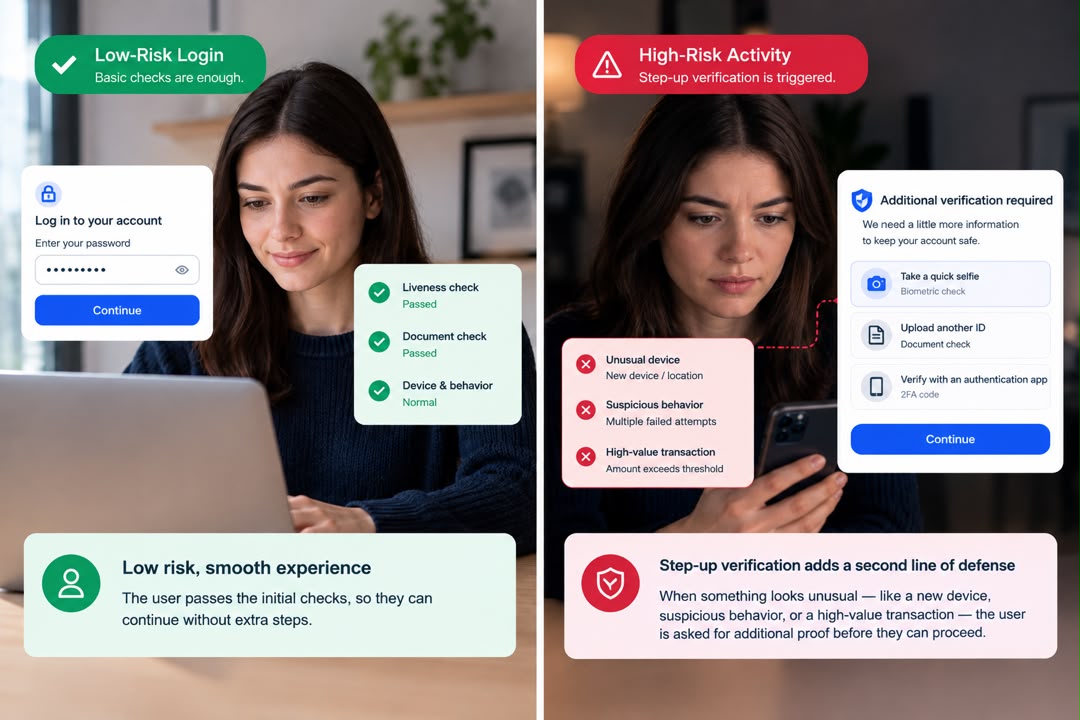
Another line of defense when the initial checks raise concerns. It can request a new set of evidence, such as a fresh biometric check, an additional identity document check, or another authentication factor.
Reverse Face Search
Purpose: Checks whether a person’s face appears somewhere else online, potentially under a different name or in a different context.
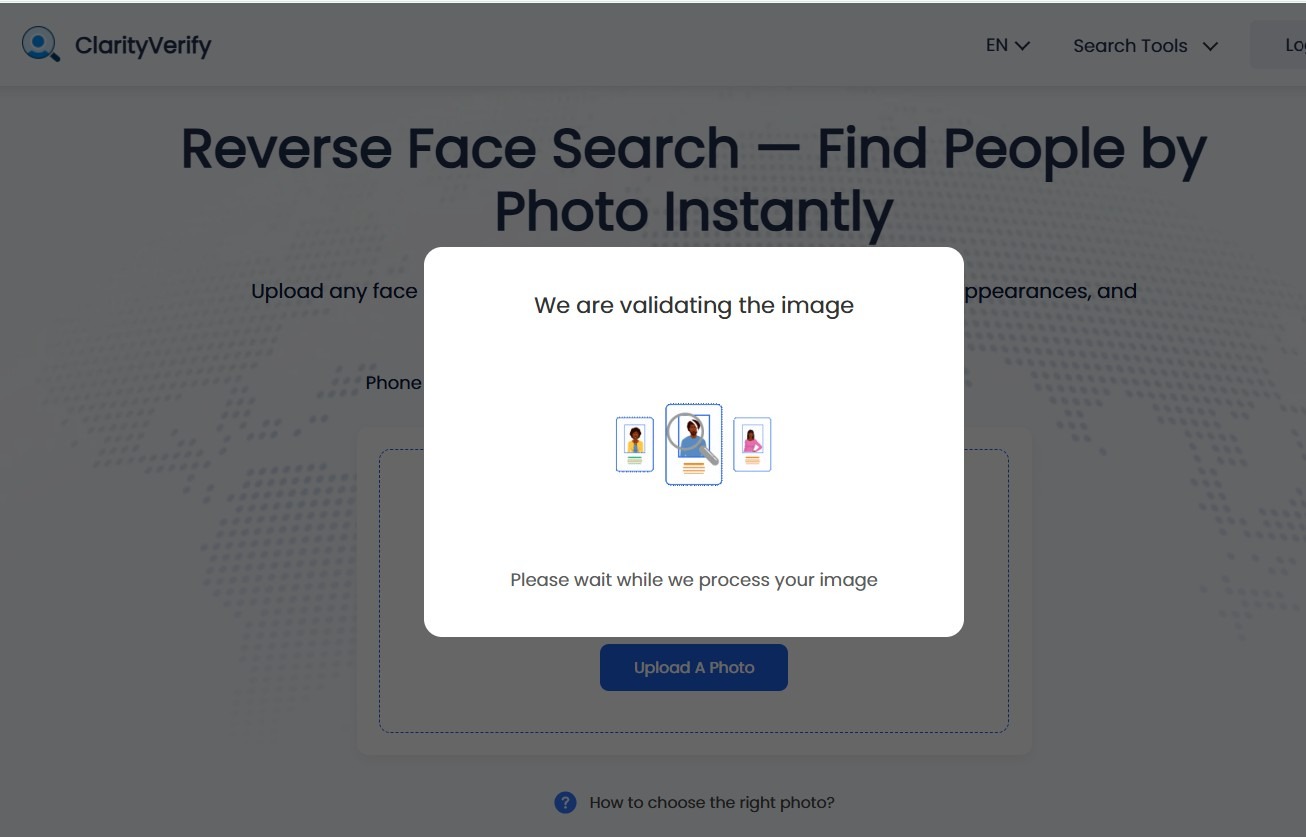
Scammers can use stolen profile photos, edited images, AI-generated pictures, or photos belonging to someone else to create convincing online identities. With a top reverse face search service like ClarityVerify, you can detect AI-generated images, find someone on social media via their photo, and generally uncover information about the person.
The table below summarizes their purpose and what they can help detect:
| Layer | Purpose | What It Can Help Detect |
|---|---|---|
| Liveness Detection | Determines whether the biometric interaction represents a live person. | Face spoofing, replay attacks, and some forms of manipulated media. |
| Document Verification | Determines whether an identity document appears genuine and consistent with the verification process. | Forged or altered identity documents. |
| Behavioral & Device Signals | Identifies suspicious activity that the face and document checks may not reveal. | Unusual session patterns, device anomalies, emulators, and other suspicious signals. |
| Reverse Face Search | Checks whether a person’s face or photo appears elsewhere online. | Stolen or reused photos, duplicate profiles, and the same image appearing under different names or contexts. |
NOTE: No single layer is airtight. They work perfectly together to close the gaps that one mode of verification may not notice.
Takeaway
Whether you’re an organization processing thousands of signups a day or you’re just one person deciding whether to trust a new online contact, there are helpful identity verification checks for you.
For an organization, combine liveness detection with document authentication, behavioral & device signals, and step-up verification. You can also integrate reverse face search or make it available for people who use your product.
As an individual, use ClarityVerify’s reverse face search to confirm if what the person told you about themselves is true. With a photo, you can get the person’s names, social profiles, dating accounts, public news mentions, etc.
FAQs
How common is deepfake fraud in 2026?
According to Entrust’s 2026 Identity Fraud Report, deepfakes now account for roughly 1 in 5 biometric fraud attempts globally, while injection attacks increase 40% year-over-year.
Is liveness detection enough to stop deepfake fraud?
No. While liveness detection is an important layer, attackers increasingly use “injection attacks” that feed synthetic videos directly into verification systems, and they bypass standalone liveness checks.
What does “layered verification” mean?
Layered verification is the combination of multiple, independent identity checks to prevent fraud from being successful. The idea is: even if the scammer is able to bypass one layer, the other layers would stop them.
What is reverse face search used for?
Reverse face search lets you check whether a photo appears somewhere else online. This helps identify stolen, reused, or misrepresented pictures. It’s commonly used to verify online dating matches or marketplace contacts before engaging further.